DC at Night

DC at Night

Saturday, December 8, 2012

The Civil War and American Art

Harvey deepens viewers understanding
When Eleanor Harvey began planning the major Civil War and American Art exhibition now on display at the Smithsonian American Art Museum, she wanted to try to answer 2 questions. First was, how as an artist, would you grapple with the war without the benefit of historical hindsight? Then there was the question,  since the focus of the show would be on landscape painters, how would the war be reflected in such works?

"I have been thinking, breathing, and hallucinating the Civil War," Harvey recently told a large group of art enthusiasts who joined the senior curator for a gallery walk and talk about the new exhibition.

Harvey said landscape painting was a central focus in pre-20th Century American art. "It was a case of we know God loves us because we have Niagra Falls and the Natural Bridge and nobody else does," she said.

The Civil War introduced almost unimaginable daily horrors into American life. So that posed a particular problem for painters. "There was no market for paintings of Americans killing other Americans over the fireplace," Harvey said. "It was so horrific the artists wanted to hold the carnage at arms' length."

In addition, the Civil War was the 1st war to be photographed from start to finish. Since cameras weren't fast enough yet to capture battle action, photographers like the famous Matthew Brady were reduced to producing images of the aftermath of bloody battles. "And after you have seen that, there is nothing to romanticize about war," Harvey noted.

So the artists adopted a whole realm of visual symbols to portray their take on the times. "They had to find a vocabulary in their idiom. They were riffing off what was going on in the war. These paintings wouldn't have been painted at any other time," Harvey said.

The curator explained that in the 19th Century "people went looking for the meaning in art." And for more than an hour, Harvey introduced many of those veiled meanings portrayed in the works she had selected. For example, a pre-Civil War painting entitled "The Coming Storm" was actually "a universal metaphor for the inevitability of war." Then there was an artist's rendition of an actual meteor that was visible over New York for 35 seconds. That was tied in to both the rise of abolitionist John Brown and the emergence of Abraham Lincoln as a great American leader.

The exhibition is arranged in themed sections. One contains a series of paintings by a Union soldier and a series of similar works by a Confederate. Another is devoted to war photography.  Yet another deals with the issues of black life and slavery. Then there are sections on the war's aftermath and Reconstruction.

The final work in the exhibition is also the largest. It is a huge portrayal of land in the American west. "This was the next new Eden. People were hoping at the end of the war that we had not lost God's blessing. They wanted to leap over the blood-soaked East. The new hope was in the West," Harvey said.

Tales, Tidbits, and Tips.
There are many ways you can enhance your understanding while viewing an art exhibition. You can read the posted information. Some exhibits offer guided audio tours. Now, there are even audio tours you can access from your cell phone. But there is no substitute for the give and take of a tour conducted by the actual curator who put the project together. We have been fortunate while in DC to have had the opportunity to undertake such tours. Harvey's was one of the best we ever encountered. In a word, it was brilliant and the information she provided was invaluable to truly understanding the work before us. You can have a chance to repeat our experience. Harvey will be conducting another gallery walk and talk on April 11. If you will be in the DC area then, make sure to mark that date on your calendar.

Friday, December 7, 2012

A Look at the Wide World of Sports

What do you think are the biggest changes in the field of sports you have witnessed in your lifetime? Well, for 2 veteran sports journalists, who between them have more than 100 years of experience on the subject, there are 2 answers. First, is the fact that sports are now ubiquitous - they are everywhere and permeate so many parts of our lives. The second is that sports is now a huge business - one that may soon approach a trillion dollars in revenue.

Recently, George Solomon, former sports editor at The Washington Post and current professor at the Shirley Povich Center for Sports Journalism at the University of Maryland, and John Walsh, a former editor of Rolling Stone magazine and current executive editor at ESPN, held a wide-ranging discussion on the world of sports at the Newseum. The discussion was moderated by Shelby Coffey III, a national newsman of note and the vice chairman of that museum.

"When it comes to differences you have the ubiquity of sports," said Walsh, who in the ESPN role he has held for 25 years has played a large part in the growth of interest in the subject. "And then you have sports as a business. I don't think it will be long before we will be be using the 't' (for trillion) word. It's a whole different game now."

Solomon concurred with that assessment, but said that there are downsides to the changes, especially the emphasis on money. "Tradition is no more," he said.

Walsh said that when he arrived at ESPN in 1987, he was part of the push for the now key network program Sports Center. "We wanted to put our best people on it. We wanted to make it a gathering place for sports fans for every night of the year. We wanted to improve the experience for the sports fan," he said.

The ratings, and the power that comes with such an audience,  proved Walsh right. "ESPN is a sports giant. It sets the table. It can do anything it wants," Solomon said.

Obviously, personality plays a huge role in sports, whether you are considering the players on the field or the sports reporters who cover them. Solomon said that during his time as sports editor for The Post he tried to cultivate top columnists to bring their take to DC's sports scene. By most accounts, when you consider such writers as Sally Jenkins, Tony Kornhesier, and Michael Wilbon, he was successful. "The voice of the town sportswise are your columnists. They make the (sports) section," Solomon said.

Like all journalism, sports in the paper and on TV is being altered by the explosion of social media such as blogs, Facebook, and, perhaps most of all, Twitter, which allows for almost instant reporting of any event in 140 characters or less.

"In the old days, reporters were told to keep their opinions to themselves. But that's completely changed," Walsh said. "The best writers are encouraged now to have an opinion and share it. We live in an opinion universe. I looked the other day and we (ESPN) have more than 50 people with more than a million followers (on Twitter)."

Both veterans lamented the fact that in differing ways ratings lead to over-coverage for some sports and athletes and under-coverage for others. "Editors see the clicks (of people reading stories on the internet) and act accordingly," Solon said.

"Today, too much is based on focus groups, audience and ratings instead of vision," Walsh concluded.

Tales, Tidbits, and Tips
As narrator, Coffey had the 2 veteran journalists engage in a lighting round discussion of a series of sports history questions. Here are the the questions and responses
What is the greatest sports event you witnessed?
Solomon - Ben Jonson beating Carl Lewis in the 100 meters (Jonson was later disqualified for using performance enhancing drugs) and the fights of Muhammad Ali and Sugar Ray Leonard
Walsh - as youngster seeing Don Larsen of the New York Yankees pitch a perfect game in the World Series
What about the biggest chokes?
Solomon - "What athletes do is very hard. I don't pinpoint chokes, I like to say surprising failures."
Walsh - again, as a youngster, watching his then-favorite baseball team the Phillies lose 23 straight games and then, just a few years later, blow a seemingly insurmountable lead and not get into the 1964 World Series. "I still have my tickets for that series (that wasn't)."
Best individual athlete?
Solomon - Muhammad Ali
Walsh - Bill Russell
Best team?
Solomon - the Red Auerbach-led Boston Celtics basketball dynasty of the 1960s
Walsh - the Pittsburgh Steelers football teams of the 1970s

Thursday, December 6, 2012

Season's Greetings from the U.S. Botanical Garden

What would you get if you combined fairies, elves, and other ethereal woodland beings, Hobbit-like habitats, more than 800 feet of train track and toy trains, and the talents of the designers at the Applied Imgaination of Alexandria, Kentucky? The answer - this year's annual holiday garden railway display at the U. S. Botanical Garden here in D. C.

So what would you see if you visited the Botanical Gardens this holiday season? Here's just a small sample;


Tales, Tidbits, and Tips
If miniature, fanciful, forested landscapes aren't your holiday thing, the Botanic Garden has other seasonal options for you. Here are just 2.


Wednesday, December 5, 2012

Celebrating the Repeal of Prohibition

On this date 79 years ago, prohibition was repealed. To commemorate that anniversary, we are reprinting this Oct. 27, 2011 post about the prohibition years in DC.

Liquor raid on Pennsylvania Avenue
If you ever wondered why Prohibition, which writer H. L. Menken dubbed "the 13 awful years," failed so miserably here in the United States, you need only look at life during that era in DC.

There was an unofficial bootlegger who had an office in the House of Representatives building. That same enterprising bootlegger later expanded his operation into his own office in the Senate.  

When the the 18th Amendment became law in 1920, there were 247 licensed bars in Washington. In 1932, one year before the 21st Amendment repealed Prohibition, records show that authorities raided 1,155 locations in the district where on-premise alcohol was found. At another 600 speakeasies, owners, tipped off by corrupt officials, were able to dispose of their illegal contraband before the raids. In fact, it is estimated that more than 3,000 speakeasies of all sizes and types operated in DC during the Prohibition era. 

"People felt Prohibition was for someone else to obey, but not for me," says Garret Peck, author of Prohibition in Washington D. C.: How Dry We Weren't. 


As part of the Books and Beyond series, Peck appeared at the Library of Congress today to discuss the history of Prohibition and his new book.


Celebrating repeal.
The attempt to prohibit the sale and consumption of alcohol was the result of decades of intense lobbying by the Temperance movement, which featured such groups as the Women's Christian Temperance Union (WCTU) and the Anti-Saloon League.

"Temperance was the social movement of the time," Peck said. "They (the supporters) believed if we dry up the country, we'll be a more God-fearing nation."   

But quickly it became apparent that the law was doomed to fail. Alcohol consumption continued, and, in many cases, especially women influenced by "the 1st sexual revolution," actually increased. "Suddenly disobeying the law became glamorous," Peck said.

The author noted that Washington D.C. was not plagued by organized crime related to the bathtub gin trade like cities such as Chicago and New York."Here it was a scene dominated by amateurs," Peck explained.

Eventually the combination of lawlessness and economic hardship caused by the Great Depression led to repeal. But, Peck noted, evidence of  those 13 years still exists.  For example, the national income tax was instituted during that time to substitute for the substantial loss of federal tax on alcohol. Words coined such as scofflaw (which literally means one who scoffs at the law) are still part of our lexicon. And then there is NASCAR, which actually began with races between drivers of souped-up cars especially equipped to rush alcohol past government agents trying in vain to enforce the Volstead Act.

Tales, Tidbits, and Tips

We celebrated the 79th anniversary of Prohibition's repeal by visiting the National Museum of Crime and Punishment to check out the speical exhibits on Al Capone and other gangsters associated with bootlegging. Made me wonder if we will ever celebrate the end of the prohibition on marijuana and other drugs.

Tuesday, December 4, 2012

A Behind-the-Scenes Look at Monday Night Football

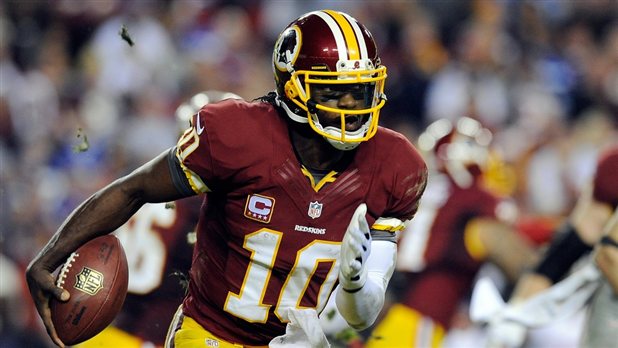
Rookie Redskins' quarterback sensation Robert Grifin (RGIII)
Last night, it took the Washington Redskins a little more than 3 hours to defeat arch-rivals the New York Giants on ESPN's Monday Night Football. But that 3-hour live sports show took 5-and-a-half full days of intense preparations to air.  And one day before, ESPN executive editor John Walsh, in DC for the game, gave a brief glimpse into the highlights of that hectic week preceding the widely-watched event.

Walsh, speaking on sports and sports reporting at an Inside Media session at the Newseum, joked that after 25 years at ESPN he has acquired "crazy uncle status." "I can say whatever I want and no one has to listen," he said. But his audience did a lot of listening, especially when he gave an insider's take on Monday Night Football.

The week begins with a lengthy meeting on Wednesday concerning the upcoming game. Decisions are made there concerning what approach will be taken. Of course, those decisions are based on the teams playing and the importance of the game. Storylines are suggested. The best are kept and developed. The others scrapped, never to see the light of broadcast.

"We set the background on the production," Walsh explained. Thursday and Friday are devoted to developing graphic packages and more background preparation. Some of these will be used during the game; others will appear as promotions on Countdown and other related sports shows.The commentators, Jon Gruden and Mike Tirico, the on-field reporters, and the rest of the huge crew arrive in the city of the home team on Saturday. There the camera crew scouts positions, while the on-air talent views the hometeam practice. That night, Gruden, Tirico, and others, interview up to 20 members of the home team and coaching staff. Some of those interview segments are used on-air, while others are off-the-record for background information.

On Sunday, the same procedure is used for the visiting team. But Sunday is also the day for Gruden, a former NFL coach, to conduct "a locker room coaching sessions," with all the key personnel on the Monday Night ESPN squad. In these sessions, Gruden gets quite specific, hoping to give viewers a believable taste of insider action. NFL teams have complicated names for their favorite plays. Gruden reviews the most often used. For example, he will say something like "sidewinder stepdown 674 left winken, blinken, and nod." If those present understand what that play is and how it works, Gruden's audience is expected to knock 3 times. If there is uncertainty, the play gets reviewed.

On game day, every member on the ESPN team is at the field by 1 p.m., doing their last-minute preparations prior to the 8:30 kickoff. After the final whistle and post-game interviews, "everyone moves out of there and gets ready for next week," Walsh said.

There is no doubt that huge ratings for Monday Night Football make it a valuable property. In 2011, ESPN renewed its contract with the National Football League for 8 years, meaning they have the rights to broadcast the games until 2021.  And the cost of that contract - an estimated $15.2 billion.

Walsh readily admits that one of the biggest changes about sports is its emergence as a huge financial business. "I don't think it will be too long before we will be using the 't" (for trillion) for the business of sports. It's a whole different game," Walsh said.

Tales, Tidbits, and Tips
Walsh was joined on the panel by George Solomon, long-time sports editor of the Washington Post and now a professor at the Shirley Povich Center for Sports Journalism at the University of Maryland. Asked how Washington Post preparations for a big in-town Monday Night game differs from those outlined by Walsh, Solomon joked, saying "It all involves getting Wilbon (popular Post sports columnist Michael Wilbon) to the game on time. And by on time, that's 5 minutes after kickoff. For Wilbon, that is on time."


Monday, December 3, 2012

Nomads and Networks

Horse adornments from a nomad burial site
For the ancient nomads of what is now present-day Kazakhstan, the horse was vital. In early post-prehistoric times the people of this central Asia region drank mares' milk and used the horse for food. But then they found out the animals could be domesticated, giving the nomads the ability to range widely over the steppes of their harsh land. But nowhere was the importance of the horse more clearly demonstrated than in the burial customs of the time. Horses wearing masks, horns, and other adornments that transformed them into formidable other-worldly creatures of mythology were buried along with their owners. In fact, in one burial site of a powerful nomad leader, the remains of 13 fully ornamented horses have been discovered.

Therefore, it wasn't surprising that replicas and items relating to horses made up a large section of the display in the Sackler Gallery's recent exhibition entitled Nomads and Networks: The Ancient Art and Culture of Kazakhstan.
A nomad burial site which were called kurgans

Since the Kazakhstan nomad culture had no writing, little is actually known about life there. However, scholars, working from artifacts discovered in giant burial mounds, have been able to speculate about aspects of nomad life in the centuries before the date attributed to the birth of Christ.  The burial mounds, called kurgans, were large, some more than 100 feet in diameter and standing as high as 15 feet tall. They were constructed with sand and stone. Experts estimated that the stones from 1 of the largest discovered kurgans weighed 15 tons. The use of stone allowed cold air to penetrate the graves which were then chilled year-round. The permafrost conditions kept the items buried in the sites well preserved.

Tomb item
The items uncovered show that movement which was so much a part of nomad experience was expected to be part of the after-life as well. Transport through the nomad netherworld could be accomplished on the horse. But since the nomads weren't exactly sure what other type of terrain they might encounter, they also included replicas of made-up beasts with wings and fish fins.

The word nomad itself comes from a Greek word meaning "roaming for pasture." And that roaming is exactly what the nomads did, spending cold weather on the plains-like steppes and then moving to the mountain foothills for the warmer season.

That constant movement provided an ideal way to transport goods between disparate cultures. Kazakhstan, which as 4 times the size of Texas is the largest landlocked country in the world, served as natural bridge between Iran (then Persia) and China. During their travels, the nomads would trade furs for textiles, ceramics and metal works, thus setting up a cultural exchange network which provided for cross-pollination of artisan ideas among highly scattered groups of people.

Tales, Tidbits, and Tips
The Nomads and Networks exhibition is now closed, but you can learn more about this period of Kazakhstan history by accessing the special Smithsonian website on the exhibit. Just click here.

Sunday, December 2, 2012

Dining in DC: New Orleans Po Boy Shop

Canavan delivering a high-five 
While it might not be a free lunch, getting a free vigorous high-five with your authentic New Orleans po' boy sandwich is something special. And last Friday, those high-fives at the New Orleans Po Boy Shop were being delivered by Michael Canavan, who was also dispensing orders to the smiling crowd of hungry lunch customers.

So how did the Friday high-five come to be? Canavan said that when the owners first opened their New Orleans shop in D.C., they wanted to try something unique. Since New Orleans is known for its spirit, they decided to hand out a high-five with each order made on the last Friday of the month. Then they decided to make the ceremony even more special by only offering it on months that contained 5 Fridays. And it just so happened that our 1st visit (which definitely won't be our last) occurred on one of those Fridays.

Preparing a shrimp po' boy
Clearly, the high-fives were cool, but what about the po' boys? For those not familiar with that term, it refers to a traditional submarine sandwich from New Orleans and other parts of Louisiana consisting of meat or fried seafood. The meat and selected trimmings are placed on baquette-like New Orleans French bread, known for its crisp crust and fluffy center. Po' boy purists claim that the bread is what makes a po' boy a great sandwich. Obviously, DC shop chef Cam McNair, whose New Orleans pedigree included stints working for big-name chefs and restaurateurs including Emeril Lagasse and the Brennan family, was well aware of that fact. He opted to buy his bread half-baked from Gambino’s Bakery in New Orleans suburb Metairie, best known for its king cakes, and finish the baking process in-house.

The next important thing, as any New Orleans native will tell you, is how the sandwich is “dressed.” That’s the word for the basic toppings on the sandwich. McNair dresses his po’ boys two ways: with lettuce, tomato, and mayonnaise for non-New Orleanians; and with lettuce, tomato, pickles, and mayonnaise for those who want a more traditional Who Dat Nation experience. Of course, there are bottles of Louisiana hot sauce available for those who want to spice up their meal.

The eatery offers 15 different po' boy options. Many are traditional New Orleans types such as roast beef or fried oyster. Others are interesting variations such as house Carolina barbeque or pastrami, red slaw, and gruyere.

For our 1st visit, I chose the gulf shrimp and Judy opted for the crab cake. To deepen my New Orleans dining, I added a cup of the seafood gumbo. So how did it compare to our New Orleans lunchtime dining? Let's just say that it was a very, very close. In fact, all that was missing was the sound of the ubiquitous New Orleans street musicians and the rolling Mississippi River..

Obviously, as the name implies, po' boys are the staple of the eatery, which since it only has room for about 15 diners inside (there is a large New Orleans-style outdoor courtyard patio for warm weather dining), focuses on take-out service. However, each day the Po Boy Shop features a daily Louisiana special. For example, you can pick up a bowl of red beans and rice with house made andouille (Louisiana sausage) on Monday. On Tuesdays, that option changes to jambalaya. If you want to try New Orleans'other iconic sandwich, the muffaletta, you can by dropping in on Wednesday.

Tales, Tidbits, and Tips
What others say:
The Prices Do DC Rating
**** 4 out of 5 po' boys (but I bet my Neville Brothers CD collection that the rating will rise to 5 on our next visit if the po' boys continue their authenticity) 

Saturday, December 1, 2012

The Tone Rangers

Imagine you're at a concert at the Kennedy Center where a group promises to survey 900 years of Western music. And the 8-man group is A Cappella. And they promise to make the entire 900-year journey in one song. And the song, which begins as a Gregorian chant and concludes with a basso profundo solo rap, is "Wild Thing," the British invasion frat rock classic from the Troggs which was forever immortalized in rock history with Jimi Hendrix's incendiary 1967 guitar performance at Monterey Pop.

Well that would give you an idea of the Tone Rangers show on the Millennium Stage last night, a performance that mixed rearranged rock songs, originals, and Christmas favorites and left the crowd  clapping for the stellar vocal performances and chuckling at the witty repartee delivered during, before, and after the songs.

To say that the Tone Rangers, with their incredibly tight harmonies, unleash a fresh approach to contemporary A Cappella music is an understatement. It would be almost impossible to find a performance that delivers more fun than that provided by this D.C -based group, which is celebrating its 25th year together this year and have been selected 4 times as Washington's best A Capella group.

First, a few words about the range of the rock selections, which also mixed in snippets of commercials and familiar TV themes. The selections ranged from an Elvis Presley tune to a trio of Herman Hermits' hits to their opening number, a reworked Paul Simon song from the 70s. One of the highlights of the night was a haunting version of the Crosby, Stills, Nash and Young anti-war anthem "Find the Cost of Freedom" which segued into the CSN favorite "Southern Cross."

In a word, the originals were unique. For example, when is the last time you heard a doo-wop tune based on a tale of a Helen of Troy who was homely?

Of course, being December 1st, the Christmas selections provided some of the most spirited responses from the crowd. The group's arrangement of the bluesy "Merry Christmas, Baby," was intriguing. But the seasonal standout of the night was "The 12 Days of Christmas" which somehow managed to deliberately and hilariously mangle the counts and include parts of several holiday hits including my personal favorite "Carol of the Bells."

Tales, Tips, and Tidbits
One of the best things about a Millennium Stage show (which are offered for free at 6 p.m. all 365 days of  years) is that you can relive them in their entirety since they are posted on the Kennedy Center web site. As soon as the performance is released, we will post a link here so you can enjoy the musical and comedic talents of The Tone Rangers for yourself. Until then, you can get a feel for their Monty Pythonesque silliness by viewing this faux documentary entitled Tone Rangers: The First 10,000 Years. To see the 6-minute short, just click here.

Friday, November 30, 2012

Now Please Don't Try This with Your Tree

Merry Black Christmas
 It had to be one of the most unique Christmas tree lightings in D.C. history. As hundreds of spectators stood on the National Mall outside the Sackler Gallery and snapped pictures yesterday, Cai Guo-Qiang, the Chinese artist known for his Olympic pyrotechnics display and gunpowder art, used a 40-foot Christmas tree to stage an Explosion Event based on Christmas tree lighting ceremonies across the country.

Actually, the event, which Guo-Qiang labeled "Black Christmas Tree," was a series of 3 quick, separate  explosions. In the first, the tree was enshrouded in black smoke. In the second, the explosion made it appear that Christmas lights were twinkling all over the tree. The 3rd explosion sent a black cloud (I kept thinking of the smoke monster in the TV show Lost)  in the shape of a Christmas tree skyward until it dissembled into something reminiscent of a Chinese ink painting and eventually dissipated. Guo-Chiang used more than 2,000 custom-made fireworks in his presentation.

The tree back to normal
Just prior to the show, Sackler officials said the event had 2 purposes - it was part of the celebration of the institution's 25th anniversary and also marked a half-century of the State Department sponsoring its Art in Embassies program.

Earlier, Allison Peck, the Sackler's head of public relations, explained the multiple meanings to The Washington Post. "The work itself is not necessarily about Christmas. It has the spirit of a sparkling holiday tree, but it's more than that. It references his (Guo-Qiang's) past work; it references Chinese brush drawings and it's in honor of our anniversary," Peck said.

And any environmentalists concerned about the impact of the special event  need not worry. The smoke was made of charcoal, which is environmentally friendly and the tree was unharmed and will be replanted in a new location.

Thursday, November 29, 2012

Dining in DC: Ben's Chili Bowl

Welcome to Ben's
When my knowledgeable foodie friends visit here in DC, they want to forego the fancy restaurants and head straight for Ben's Chili Bowl, arguably the most iconic and historic eatery in Washington. Opened in the summer of 1958, the landmark on U Street is visited by neighborhood regulars, tourists, celebrities, and world leaders. Its most popular item is its original chili half-smoke, a one-quarter pound half-pork and half-smoked beef sausage on a warmed steamed bun, topped with mustard, onions, and a spicy chili sauce from a family recipe that has remained the same for 54 years and is recognized worldwide as DC's signature dish..

While the eatery is filled with pictures of famous diners who have eaten at Ben's, none of them are more essential to the history of the place than regular customer Bill Cosby. Cosby says he 1st began coming to Ben's when he was in the Navy and stationed at nearby Bethesda, Maryland. Cosby's most noted appearance occurred in 1985 when he held a national press conference at Ben's to celebrate the success of his #1 TV show.

Outside mural completed this summer
The eatery also received a tremendous boost in January of 2008 when then president-elect Barack Obama 1st came to Ben's for lunch just days before his inauguration. To honor the pair, visitors encounter a sign near the register that says "People Who Eat Free: Bill Cosby, President Obama/Family, And No One Else."


But from the initial days the eatery was opened by Trinidadian-born immigrant Ben Ali and his wife Virginia, the site was populated by some of the biggest black entertainers of the time. U Street was home to so many clubs that it earned the nickname "Black Broadway." It was not uncommon to see such luminaries as Duke Ellington, Miles Davis, Ella Fitzgerald, Cab Calloway, Nat King Cole, Redd Foxx, Dick Gregory, and even Dr. Martin Luther King eating or just hanging out.

But in 1968, rage over the assassination of Dr. King ignited a wave of violence that devastated much of the city. Most of the city closed, but Ben's remained opened. Ali wrote "Soul Brother" in soap on the front window in the hope that looters and arsonists would not strike his establishment. The owner received special permission to allow Ben's to stay open after curfew to feed the policemen, firemen, activists, and public servants who were trying to restore order.

The half-smokes are a'  grillin'
There is even D.C. history behind the building before it became Ben's. Built in 1910, the edifice housed Washington's 1st silent theater, the Minnehaha. Today, history can be found throughout the eatery. In addition to the hundreds of photos, much of the furnishings are the same as when Ben's opened in 1958.

The restaurant has been featured on several Food Network shows and the Travel Channel's Man v. Food. It has been written up in almost all noted dining publications. In 2004, the James Beard Foundation named Ben's one of the "down home eateries that have carved out a special place on the American culinary landscape." In January 2009, food magazine Bon Appetit named Ben's one of the country's 10 best chili spots, asserting that "no reasonable discussion of great chili joints can take place without mention of this U Street institution."

Tales, Tidbits, and Tips
What Others Say:

The Prices Do DC Rating:
***** 5 out of 5 plates (4 for the food and service, 1 for the history)

Wednesday, November 28, 2012

Barbary Pirates and the Shores of Tripoli

For Chipp Reid, his new book was really an outgrowth of the resurgence of interest in pirates prompted by the success of the movies The Pirates of the Caribbean,  the series of Johnny Depp films based on the popular Disney ride. A few years ago, Reid, now a technical writer and editor with the National Archives and Records Administration, was crewing on a tall ship in Connecticut. One of his duties was entertaining young students who visited the ship.

 "They were really interested in pirates, but I didn't know much about the Caribbean pirates like Blackbeard and Henry Morgan. But I knew about America's involvement with the Barbary pirates in Tripoli. So those were the stories I told the kids. I wanted to entertain them with something factual and these were some great sea stories," Reid says. A father of one of the students was so impressed with the impact of Reid's stories on his son that he suggested Reid should write a book about Stephen Decatur, Richard Somers, and the other heroes of that campaign which really established America as a naval power.

Yesterday, Reid appeared at the National Archives to discuss his book entitled Intrepid Sailors: The Legacy of Preble's Boys and the Tripoli Campaign.

Reid said he used primary sources such as letters and notes from those involved to tell his story. "This is not a textbook. To me, history should live. It should have oomph. I used the words of the men who were there. If they wrote it, I found it and used it," he explained.

While the problems with the Barbary pirates commenced in 1801, the background for the story actually goes back to the foresight of President George Washington, who realized that if America was to maintain its hard-fought independence, it would need a navy. So in 1794, Washington convinced Congress to authorize the building of 6 frigates.

However, when the Boshaw of Tripoli cut down an American flag pole in May of 1801, signaling an all-out piracy attack on American ships and shipping, the fledgling Navy hadn't been tested. "The pirates of the 1800s were not the Somali pirates of 2012. Piracy was the economy of Tripoli. The Mafia would get jealous of the protection racket the Tripoli pirates set up," Reid said. Basically, the pirates would stop any ship sailing in their area and demand tribute. If their demands for "chests of money" weren't met, they would capture and confiscate the ship. At the time, American shipping was a huge part of the country's economy, taking in $25 million, which is today's figures would equal about $2.6 billion.

Obviously, Americans were upset with the pirates' actions, and President Thomas Jefferson ordered the Navy to stop the piracy. The first 2 attempts proved futile, but that changed when 43-year-old Edward Preble was put in charge of a 3rd attempt. "Actually he and his officers like Stephen Decatur, Richard Somers, and Charles Stewart formed a bond on what the Navy and Marines still base their officers' traditions today," he said.

Initially, Preble didn't think much of his young, untested officers, whose average age was 21. "They don't want to listen. They don't want to work. They won't do anything I tell them," an exasperated Preble wrote to his wife. For their part, the men hated Preble, who forced them to drill repeatedly. Once, Preble ordered them to spend 72 straight hours drilling without sleep. However, when, in their 1st encounter, Preble forced a British ship captain to capitulate, the men began to change their opinion of their leader and saw the benefits of the training he had put them through. "That episode changed every officers idea of their commander," Reid said.

While the Navy under Preble had many successes, the pirates were able to capture the U.S.S. Philadelphia and its crew of 312 men. One of the best stories in the book, Reid says, are the escape attempts of captives. "It makes Steve McQueen and Richard Attenborough (2 of the stars of the award-winning World II movie The Great Escape) look like amateurs," Reid joked.

Another riveting story in the book concerns the ship Intrepid, which the Americans renamed after capturing it from the pirates. Despite the American success, the Boshaw refused to capitulate. Finally, Somers agreed to load the Intrepid with 15 tons of explosives, sail the ship into the harbor, and deliver a crippling blow to the Boshow.

Somers realized that if the Intrepid was captured, the munitions on board could restock the pirates. Rather than let that happen, Somers said he would blow the boat up. "Nobody comes on this boat unless you're willing to die by your own hand," Somers told his men. All 12 agreed to the plan. The boat sailed into the harbor, was discovered by 2 pirate ships, and exploded, destroying the Intrepid and both pirate ships.

But the heroism of Somers, Decatur, and the others became part of legend and history. And the legacy of the professionalism they forged still  resonates in the Navy today.

Tales, Tidbits, and Tips
Even though the Tripoli campaign occurred more than 200 years ago, there is still one order of business to complete, Reid maintains. The remains of Somers and the others on the Intrepid have never been returned. And apparently a major stumbling block is the U.S. Navy and Congress. To learn more about the issue, check out the websites Bringing Richard Somers Home and The Intrepid Project.

Sunday, November 18, 2012

Poetic Likeness

Langston Hughes portrait
When National Portrait Gallery historian David Ward agreed to curate the show Poetic Likeness: Modern American Poets he had one major concern. "The people have to be entertained," Ward says. "I was concerned it would be visually dull. You don't want to have a snoozer."

Last week Ward conducted a personal tour of the exhibition he put together, which features the likenesses of more than 50 of America's 20th Century poets, almost all the famous and a few of the lesser-knowns.

Ward said his goal was to create an exhibition that would merge words and images to create a cultural show highlighting American poetry and poets who were creating in the years between 1900 and the 1970s.
The curator said that there were 2 qualifications for inclusion into the exhibit. 1) the poet had to have a particular impact on the world of American poetry and 2) there had to be a visually interesting portrait of the poet available to be placed next to the snippet of poetry and brief biographical sketch that would introduce each writer.

The exhibition begins with Walt Whitman and Ezra Pound, 2 very different poets whom Ward contends created the foundation of American poetry. From Whitman came the idea that American poetry should express the aspirations of common people in a distinctive voice appropriate to a democratic culture. Pound emphasized that the new poetry should use well-crafted language that was innovative and captured the present moment, but at the same time, was responsive to poetic traditions.

The Allen Ginsburg inclusion
Other significant poets, which Ward called "makers", also receive multiple portrait treatment. They include Hart Crane, Robert Frost, Langston Hughes, and Marianne Moore. All the other poets are represented by a single portrait. "All these poets were forcing their way through because they were so good," Ward said.

Ward says his interest with poetry started when he began reading the collective poetic writings of Robert Penn Warren, who is best known for his political novel All the King's Men. He said that while the exhibit definitely reveals some of his bias, he tried to let poetic reputation, not personal like dictate who got included. "I felt we should put in Gertrude Stein though I don't even like her," Ward said.

Ward was asked why people should explore this exhibit and the poetry that it is based on. "While challenging, poetry embodies a cultural moment in a way that other disciplines can't," he said.

Tales, Tidbits, and Tips
If you like poetry, poets, or intriguing portraits, you should check the Poetic Likeness show at the National Portrait Gallery. It will be on display until April 28.

Saturday, November 17, 2012

Picture Perfect

Don't think chance plays a role in career choice? Consider the cases of these 2 award-winning Washington DC photo journalists.

As a young woman, Nikki Kahn wasn't even interested in photography. A friend who wanted to take a photo course at a local community college called and begged Kahn to take the class with her because it wouldn't be offered if enough people didn't enroll. "I fell absolutely in love with it as soon as I saw that 1st image developed in a dark room," says Kahn, now a Pulitzer Prize winner for The Washington Post. 

Then there's Bill Clark, who shoots politics and Capitol Hill for Roll Call. Clark was a political science major in college. He gained an internship with U.S. News and World Report. As an intern, he was able to procure free gear, free film, and free processing. He was hooked.

Kahn and Clark appeared at the Newseum yesterday to discuss their work in a special Inside Media program scheduled as part of the annual Nikon Photo Day. Both photographers have award-winning work in the annual Eyes of History 2012 photo contest which is now on exhibit at the Newseum.

For Kahn, the trick to being a top photojournalist is always being mentally prepared. "You never know when the great assignment is going to be. It could be in your neighbor's back yard," she said. Kahn discussed an especially emotional photo image she captured of President Barack Obama in Iowa on the last night of his campaign. The shot shows tears streaming down Obama's cheek at the end of his final campaign speech in the state where his presidential aspirations began 2 campaigns ago. The picture appeared on the front page of the Post on the day Obama won re-election. "I try to find shots that accentuate the human moments," Kahn said. "This was a nostalgic moment for him"

Clark says he prowls the Capitol and DC looking for "found moments" that allow him to capture things that "are a little bit off." One of his award winning shots this year shows financial reserve chairman Allan Greenspan standing alone on a Washington street corner using his cell phone unaware that nearby is a protester with a sign bearing the slogan "Standard and Poors Gives Congress a YOU SUCK."  Clark came across the scene on a walk back to his office. "I quickly worked to frame the shot because I didn't want to spook Alan Greenspan," he explained.

Kahn was honored for both a series of portraits of Civil Rights leaders taken to be displayed as part of a series on the new Martin Luther King Memorial and shots commemorating the 25th anniversary of the nuclear accident at the Chernobyl nuclear plant. "I wanted to see how people were coping and I found a haunting desolate landscape," Kahn said, an observation that was clearly supported by the eerie, chilling black and white photos she captured.

Both photographers agreed that new innovations have greatly changed photojournalism. For example, Clark said that when he started his career in Georgia, on a Friday night he would have to shoot 2 or 3 high school football games. But he couldn't stay at any game past halftime. He had to dash back to the office and process his photos before deadline. Today, those photos could be transmitted instantaneously anywhere in the world right up until the moment of publication.

But despite the technological advances, the human element still plays a role. ""Having a great eye and working to be good at what you do can make a big difference," Khan said.

Tales, Tidbits, and Tips
Inside Media program moderator John Maynard asked the 2 photojournalists what would be their dream assignment. Clark joked that he was trying to convince his editor to let him tour Europe doing a series on all the legislatures there. "So far, he's not falling for it," Clark said. "I'd like a little beach assignment," said Kahn with a smile, who won her Pulitzer for her work capturing the death and destruction of the last massive earthquake in Haiti.

Friday, November 16, 2012

Mexico and a Failed Drug War

Somebody blow taps. The American war on drugs has been lost. This year, $25 billion was spent on enforcing the failed drug war, and that total doesn't include money for prosecutions and incarceration. Yet, as 2012 ends, and after decades of such expenditures, the U.S. finds itself with drug use levels ready to exceed the former highs of the 1970s. One of every 3 black males between the ages of 18 to 35 are either in prison, awaiting trial, or on parole. If you removed non-violent drug offenders from that total, the number would plummet by 80 %.  Finally, just this week, a new Rasmussen national poll shows that only 7% of  Americans believe that we are winning the war on drugs, while 82% are sure we are losing it.

And if you think conditions are bad here, you should look to our neighbors to the south. In Mexico, 50,000 people have died from drug violence in the last 10 years. Last year, Guatemala seized $12 billion in drugs, money, and weapons, a figure which represents 2 years of that country's budget. In Honduras, there is genuine concern that the country might be turned into a Narco state. In fact, the ultra-violent drug cartels in the Latin American countries are being labeled a fast-growing national security problem for the U.S.

"There are bribes, intimidation, terror, torture, and killing," says Cato Institute Latin American policy expert Ted Galen Carpenter. "The cartels have a saying plata o plomo. Silver or lead. Go along or die. The drug war started by (President Richard) Nixon hasn't worked and there have been drastic consequences."

Carpenter appeared at the Cato Institute this week to discuss his new book The Fire Next Door: Mexico's Drug Violence and Its Danger to America.

The root of the problem, Carpenter says, is that there are such vast sums of money to be gained in the illegal drug trade. Last year, drugs brought in an estimated $100 billion worldwide, with $40 billion of that in Mexico.

And no group better demonstrates the futility of the drug war than the Zetas. Several years ago, special elite army forces were financed by Mexico and given special training from the U.S. military. However, once dispatched to combat the drug cartels, the Zetas quickly discovered they "could make a lot more money taking their skills to the other side," Carpenter said. The Zetas began providing protection for the very cartels they had been created to destroy. Then they realized they could make even more money if they took over entire operations. Today, the Zetas are Mexico's 2nd largest cartel.

When possible, the cartels use money to cement protection for their operations. Some government officials in Mexico City were caught taking $400,000 a month bribes to look the other way. Of course, when money doesn't work, intimidation and killing are introduced. Beheading appears to be the most popular form of  execution. Both the violence and the extreme nature of it are increasing, Carpenter said. For example, police recently found a headless body. Nearby they found the severed head. But the head had no face. The face, sewn to a soccer ball,  was found in another area a short distance away. "It's sadism run amok," Carpenter said.  "You're seeing the kinds of things you have never seen before in economic killings before. These are the kinds of things you see in wars from an ethnic, religious, or racial basis." And the cartels don't just target opponents; they go after entire families. "You have black SUVs  trailing school buses and armed toughs at basketball games," Carpenter explained.

So what is the answer? Carpenter says there really is none if the U.S. continues to outlaw the use of drugs. "Prohibition didn't work in the 1920s and it doesn't work today. Prohibition only empowers gangsterism. There is a tremendous demand (for recreational drugs). I'm not saying they are good. But would you rather have all that in a legitimate government bureaucracy or in the hands of violent criminals?" Carpenter posited. He said he believes marijuana should be treated just as alcohol is now. Other drugs such as heroin, cocaine, and meth could be treated the same as legally prescribed drugs. "Those other drugs are tougher, but we need to debate what to do," Carpenter said.

Citing the just-released national poll showing the failing nature of our current policy and the victories for legal marijuana use in Colorado and Washington, Carpenter said public opinion on drugs is shifting. But why will no politicians acknowledge that the drug war has failed and legalization may be warranted? "Politicians want to follow. They want to know where the crowd is going before they lead the parade," Carpenter said.

Carpenter saved some of his harshest words for President Barack Obama, who has remained silent on the drug issue. Obama has admitted that he smoked marijuana and used other drugs as a young man. "What if he had gotten caught?" Carpenter asked. "Would he have gone to college? Would he have gone to law school? Would he have become president of the United States? I don't think so. But to his shame, Obama has shown no aversion to seeing others suffer severe criminal penalties for things he did in his youth."

Tales, Tidbits, and Tips
Carpenter is not alone in his call for legalization as a way to end a failed drug war. Time magazine printed an article this summer offering 10 reasons why the U.S drug policy should be revisited. You can read that article by clicking here.

Thursday, November 15, 2012

To The Brink


John Kennedy looked down at the single pen on the desk.  Even though he had been president less than 2 years, he was used to signing milestones with many pens, then giving them away as mementos. But this signing would take place with a single pen. Never in the history of the world had an American president signed such a document. It called for a quarantine of the tiny island of Cuba where the Soviet Union was placing nuclear missiles aimed at the U.S. Everyone in the silent room realized that Kennedy could be signing a call to action that could trigger thermonuclear war and worldwide destruction.

Kennedy completed the signing and slipped the pen into his pocket. "I am going to keep this one," he said.

Today, that pen in one of the key artifacts included in the To the Brink: JFK and the Cuban Missile Crisis exhibition now on display at the National Archives.

After an introductory section giving the back story on the 13-day October, 1962 stand-off, the exhibit proceeds with 6 chronological stations where visitors can hear excerpts of actual White House tapes made of crisis participants discussing the challenge and options. Each station contains a quotation from the terrifying ordeal as a thematic organizer. They are:

  1. "We do not believe they are ready to fire." Sandy Greybeal of the CIA
  2. "Is there anyone out there who doesn't think that we to do something [about the missiles]." JFK
  3. "You're talking about the destruction of a country." JFK.
  4. "If we go to Cuba we are taking a chance that their missiles which are ready to fire won't be fired ... is that really a gamble we should take?" JFK
  5. "OK, let's proceed." JFK.
  6. "Time's tides are on us." JFK
Finally, on Oct. 28 Soviet Premier Nikita Khruschev said "Remove them. As quickly as possible before something terrible happens." On Nov. 20, after more than a month of the world holding its collective breath,  the quarantine was lifted. The leaders of the world's 2 greatest powers had been to the nuclear brink. This time the world survived.

But even today, the exhibit demonstrates the terror and horror of the Cuban Crisis. One of the most chilling reminders of the real possibility of annihilation is a simple, one-page declassified CIA document. The document contains 3 red circles, showing the nuclear destruction capabilities of the 3 types of missiles the Russians could have used. The 1st, at 630 miles, would have meant the end of all of Florida and the southern cities of Savannah and New Orleans. The 2nd circle would threaten San Antonio, Dallas, Atlanta, and Washington D.C.  The last circle at 2220 miles demonstrated that the Soviets could have destroyed any continental city except Seattle.

Tales, Tidbits, and Tips
Whether you want to relive your own experiences of October, 1962 or come to understand them for the 1st time, you should check the To the Brink exhibit out. It will be open until Feb. 3, 2013.

Wednesday, November 14, 2012

Women Who Rock

In 1963, fledgling record producer Quincy Jones teamed with Teaneck, New Jersey high school junior Lesley Gore to create one of the great pop singles It's My Party. "I remember when I heard It's My Party I had an immediate relationship to it," Gore said years later. "What was it about that song? Probably the little middle-class rebel in me trying desperately to get out"

The young Gore quickly followed up with one of the catchiest answer songs in rock and roll - "Judy's Turn to Cry." But it was her 3rd Top 10 hit - "You Don't Own Me," credited with being the 1st rock feminist anthem, which really unleashed that middle-class rebel. The song is even more revolutionary when you consider its lyrics such as:
And don't tell me what to do
And don't tell me what to say
or
I'm young and I love to be young
I'm free and I love to be free
To live my life the way I want
To say and do whatever I please
were written at the same time when another popular hit urged:
Oh, Johnny get angry
Johnny get mad
Give me the biggest lecture that I ever had
I want a brave man, I want a cave man
Johnny show me that you care, really care for me

But Gore soon faced a decision. She was graduating high school. She could continue to record and tour full-time or she could go to college. She opted for Sarah Lawrence University. Soon the Beatles and the other British bands invaded and Gore, although she still performs today, never achieved such great heights again.

But her early success and influence was enough to assure her a prominent place in the Women Who Rock: Vision, Passion, Power exhibit put together by the Rock and Roll Hall of Fame which is now on display at the National Museum for Women in the Arts.

The showcase devoted to Gore and her career is typical of those of the more than 50 women represented.  There is a dress that she wore for her debut at the Plaza Hotel in New York City which was so heavy she could only wear it for one number. There is a special music score touring case given to her by Jones and hand-painted by a fan. There are copies of both lyrics and 45s.

The extensive, informative, visually and historically interesting exhibit is divided into 8 chronological themes. They are:
  • Suffragettes to Juke-Box Mamas: The Foremothers/ Roots of Rock
  • Get Out of That Kitchen, Rattle Those Pots and Pans: Rock Emerges
  • Will You Still Love Me Tomorrow: The Early 1960s/ Girl Groups
  • Revolution, The Counter-Culture & the Pill: The Late 1960s
  • I Will Survive: The 1970s Rockers to Divas
  • Dance to the Music: Punk and Post Punk
  • Causing a Commotion: Madonna and the Pop Explosion
  • Ladies First: The 90s and the New Millennium
All the ladies are represented from Lady Day to Lady Gaga. There are the queens from Aretha to Latifah. Bessie and Ma Rainey are in the house, as are Janis and Gracie.There are the too-soon departed like Donna and Whitney. The great groups from The Ronettes to Bikini Kill. The fashions from Cher's elaborate Bob Mackie special creation to bassist for Sonic Youth Kim Gordon's "Eat Me" black and white T-shirt with a bright red Rolling Stones tongue. The personal instruments which produced the soft sounds of Judy Collins or the hard-edge songs of Joan Jett.

The exhibit ends with Lady Gaga's (then known as Stefani Joanne Angelina Germanotta) upright childhood piano, which she received from her grandmother. On the top are candid shots of Stefani and her beloved piano, which her mother says she loved from the first time her tiny fingers smacked down on the keys. Looking at those shots, it's had to imagine the Lady Gaga she would become. But for women who rock, with their vision, passion, and power, anything is possible. 

Tales, Tidbits, and Tips
You have plenty of time to check out the Women Who Rock exhibit. It isn't scheduled to close until Jan. 6.

Tuesday, November 13, 2012

Dining in DC: Pho 75

Noodle soup. My grandmother's belief in its medicinal power was persuasive. That's why for the past 6 decades be it cold, flu, or sinus, I've made chicken noodle soup the meal of choice. But this week I developed a sinus problem that seemed impervious to Doctor Daisy's certain remedy, so I decided to vary the recipe. I headed to Pho 75 in Rosslyn, thinking that perhaps this particular strain of illness might respond better to an Asian treatment.

Pho is a traditional Vietnamese beef and noodle soup and Pho 75 has the reputation of producing some of the best pho in the DC area. And when you are sick, you want simple, but you also want the best.


At Pho 75, 2 ingredients are standard - a savory beef broth and a large heap of vermicelli noodles. You choose from one of 8 cuts of beef. That all comes in either a regular or large bowl. The bowl is accompanied by a side plate that includes bean sprouts, spicy green Vietnamese pepper slices, lime wedges, and fresh mint leaves so you can customize the taste of your soup. In addition to the napkins, plastic spoons, and chop sticks you need for your pho, you can also spice up the dish with heapings of Asian red chili sauce. 

So how did the pho at Pho 75 make it as a food? In a phrase, the place's reputation is clearly deserved. A few words of caution if you are a fussy eater, however. It is impossible to be neat and look cool while eating pho. It is a food made to be slurped and sucked. Also, don't expect pleasantries from your Vietnamese servers. They are serious about getting you seated, taking your order, and getting your food to you amazingly fast. And don't expect them to bring you the check. That remains at the counter where you pay. Oh, and bring cash, since they don't accept credit cards.

And pho as medicine? I did feel better after lunch. But just as with any medical trial, we'll need a few more tests before we can give it grandmom's seal of approval.

Tales, Tidbits, and Tips
What others say:
The Price Do Dc Rating:
****^ - 4.5 out of 5 bowls (usually we use plates, but this is pho you know)

Popular Posts